





By Shehu Muhammad Shehu
The Centre for Journalism Innovation and Development (CJID), with support from the European Union (EU), on Tuesday, May 19, 2026, launched an 18-month project aimed at countering disinformation and strengthening democracy in Northwestern Nigeria.
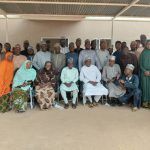
The inauguration ceremony, held at Dankane Guest Inn Palace, attracted participants from academia, civil society organisations, traditional institutions, security agencies, the media, and students from within and outside the state.
The project, titled “Countering Disinformation and Empowering Democracy,” covers about 5 Northwestern states which includes Sokoto, Kebbi, Zamfara, Niger, and Katsina. It is designed to combat misinformation, disinformation, and harmful narratives believed to be contributing to insecurity in the region.
Speaking at the event, Chairman of the Board of the CJID and former Vice Chancellor of the Federal University Kashere, Prof. Umaru Pate, said the initiative seeks to promote media and information literacy while addressing the growing spread of false information surrounding security challenges in the Northwest.
According to him, the project aims to strengthen fact-checking systems, promote credible sources of information, and improve public trust in the media.
“People value deep care, and that care depends on the quality of information they receive and listen to,” he said.
Prof. Pate stressed the need for collaboration among credible institutions, journalists, politicians, community leaders, and civil society groups in tackling misinformation and building a healthier information ecosystem.
“If we are thinking about the future of the media, it must begin with research, collaboration, and stronger connections between people and communities,” he added.
He commended the European Union for partnering with CJID on the initiative.
Speaking the EU Representative, Eric Pitois said the programme, with a budget of €1.5 billion, forms part of a broader global effort to reduce the spread of disinformation, especially on social media platforms, while promoting transparency and accountability.
“Our project is designed to address the root causes and symptoms of disinformation by promoting transparency, accountability, and public awareness,” he said.
He explained that the initiative seeks to strengthen democracy by protecting the integrity of information and encouraging informed civic participation.
“We believe that a strong and resilient democracy is the most effective defence against disinformation and other forms of information manipulation,” he added.
Pitois noted that misinformation remains a global challenge with devastating consequences, including loss of lives, stressing the need to promote media literacy, fact-based reporting, and critical thinking to strengthen peace and social cohesion.
Also speaking, the Vice Chancellor of Usmanu Danfodiyo University, Prof. Bashir Garba Represented by Deputy Vice-Chancellor for Research, Innovation & Development, professor Aliyu Jibril described the programme as timely, noting that training journalists and young media practitioners would go a long way in addressing the menace of fake news and disinformation in the region.
He reaffirmed the university’s commitment to partnering with CJID to ensure the dissemination of credible and accurate information in society.
Also speaking, the Executive Director of CJID, Akintunde Babatunde, described the initiative as one of the organisation’s most important interventions.
He said misinformation has increasingly become a driver of violence, especially in communities affected by terrorism, banditry, and insecurity.
“A lot of communities facing violent attacks are exposed to multiple conflicting narratives, and this fuels fear, anxiety, and reprisals,” he said.
Babatunde recalled instances where unverified claims circulated on WhatsApp groups triggered violence in communities, stressing the need for citizens to develop critical thinking and verification skills.
“When you consume food that is harmful, it affects your body. In the same way, consuming false information affects people’s mental and social wellbeing,” he added.
He explained that the project works with journalists, teachers, community leaders, and radio stations to improve media literacy and promote a fact-checking culture among citizens.
He urged the public to always verify the credibility of information before sharing. “If in doubt, confirm through fact-checking platforms like Dubawa,” he added.
Representing the Sultan of Sokoto, Dr. Muhammad Jabi Kilgori commended the EU and CJID for their interventions in Sokoto and other parts of Nigeria.
He pledged the support of traditional leaders towards the success of the project, noting that traditional institutions play a key role in verifying information before it spreads within communities.
Dr. Kilgori also stressed the importance of training journalists on information gathering and verification, assuring that traditional rulers would work closely with CJID and the EU throughout the 18-month duration of the project.