





By Abdulaziz Bagwai
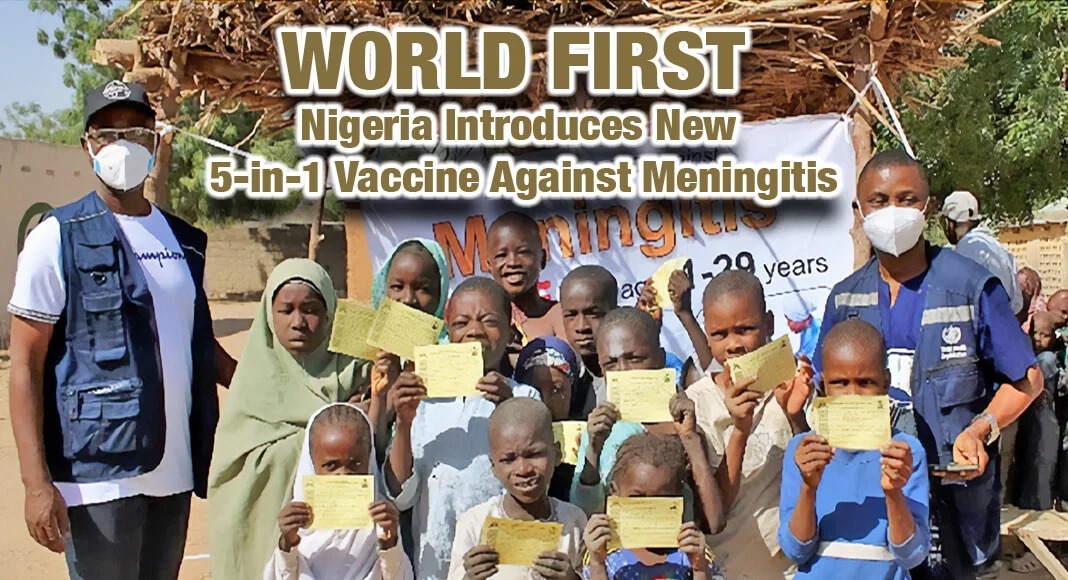
In March 2024, Nigeria took a step in the fight against meningitis by introducing the Men5CV pentavalent conjugate vaccine, designed to protect against five of the most harmful strains of the meningococcal bacteria (A, C, W, Y, and X) in a single shot.
The rollout of this vaccine is a significant turning point, both for Nigeria and the entire African continent, as the region continues to face the recurrent threat of meningitis epidemics that disproportionately affect its vulnerable populations.
The vaccine’s introduction comes in the wake of a severe outbreak that hit northern Nigeria between October 2023 and March 2024. According to a report by the World Health Organization (WHO), approximately 1,742 suspected cases, 101 confirmed cases, and 153 deaths were reported across seven northern states: Adamawa, Bauchi, Gombe, Jigawa, Katsina, Yobe, and Zamfara.
The deadly resurgence of the disease underlines the urgency of such a vaccine, particularly in a region that has long struggled with high rates of meningitis morbidity and mortality.
Understanding the Meningitis Crisis in Africa
Meningitis is an infection that causes the inflammation of the membranes around the brain and spinal cord. These membranes are called meninges.
The inflammation from meningitis most often triggers symptoms such as headache, fever and a stiff neck. Bacteria is said to be the most common cause of this infection in Africa. Other causative agents of meningitis globally include virus, fungi, and parasites.
In Africa, there are countries tagged as the African Meningitis Belt. These are areas stretching from Senegal in the west to Ethiopia in the east, the impact of meningococcal meningitis has been devastating.
The Meningitis Belt is home to 26 countries where the disease occurs at particularly high rates.
Historically, these countries have faced frequent and deadly outbreaks, often exacerbated by inadequate healthcare infrastructure, limited access to vaccines, and poor public health response systems. Nigeria, being one of the most populous countries in the region, has borne the brunt of these epidemics, with thousands of cases and hundreds of deaths reported over the past few decades.
The MenFive: A Major Scientific Achievement
The Serum Institute of India spent thirteen years developing this multivalent vaccination, with funding from the UK government’s Foreign, Commonwealth and Development Office and collaboration with PATH (previously the Program for Appropriate Technology in Health).
“This is exactly the kind of scientific innovation, supported by the UK, which I hope is replicated in years to come to help us drive further breakthroughs, including wiping out other diseases. The rollout of one million vaccines in northern Nigeria will help save lives, prevent long-term illness and boost our goal of defeating meningitis globally by 2030,” said Andrew Mitchell, UK Minister for Development and Africa.
Nigeria’s minister of health and social welfare, Prof. Muhammad Ali Pate, who was instrumental in making this breakthrough remarked that Northern Nigeria, particularly the states of Jigawa, Bauchi, and Yobe, were badly hit by the deadly outbreak of meningitis, and that the vaccine is a new weapon to medical professionals to both end the outbreak and set the nation on the route to elimination.
However, the Health Minister, recently acknowledged Gavi, the Vaccine Alliance, for further funding Nigeria’s one million doses of the Men5CV vaccine. “We are grateful for the support of Gavi, WHO, and UNICEF in enabling this swift deployment.
Together, we are not only containing today’s outbreak but also laying the foundation to eliminate meningitis and strengthen routine immunisation for the future,” he said, and added that, “with Gavi’s support, vaccines successfully eliminated meningitis A from Africa’s meningitis belt. Now, they are also combating other serogroups of this deadly and debilitating disease, bringing us closer to our goal of eliminating meningitis by 2030.”
What this Means for Africa and the Global Health
With high endemic rates and recurring epidemics, Africa has historically had the greatest prevalence of meningococcal illness. But recently, there have been significant changes in the epidemiology of meningococcal illness. An excellent example of the potential to eradicate the other five serogroups through the use of MenFive is the 2010 introduction of MenAfriVac® in Burkina Faso, which eradicated serogroup A of meningococcal meningitis in three years.
In order to achieve the World Health Organization’s goal of eliminating meningitis by 2030, other nations in the meningitis belt can take inspiration from Nigeria’s emphasis on preventive measures through public health and vaccination campaigns, as well as its cooperation with international health organisations like Gavi and the Vaccine Alliance in the introduction of the MenFive conjugate vaccine.