


By: Abdulrasheed Aishah
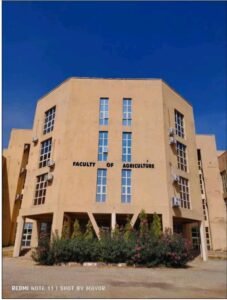
When the Student Industrial Work Experience Scheme (SIWES) period approached, many students of the Faculty of Agriculture at the Usmanu Danfodiyo University Sokoto (UDUS) heaved a sigh of relief, not because they were eager to leave the classroom, but because it offered an escape from the endless stress of campus life – juggling across lecture theaters, the burdening heat of the Caliphate City, and the daily meal preparation.
At home, some of these students say, there are many reductions from these struggles that would enable one to rest, focus, and learn more effectively.
Muhammad Tohir, a 400-level Agriculture student, shared his experience attending his SIWES program at a veterinary clinic.
He praised the program’s emphasis on punctuality and seriousness, noting that the staff were supportive. Tohir valued the hands-on experience, which included participating in operations, prescribing drugs, and recording medical observations.
However, he suggested that doing the program from home could be more comfortable, especially given the lack of academic activities during the first semester.
While acknowledging potential logistical challenges, Tohir pointed out that students in other faculties, such as life sciences are already doing their SIWES at home without issues, and suggested that with proper management, it could work for Agriculture students as well.
“It (the SIWES program) really helped us gain basic practical knowledge, but honestly, if I had the chance to choose again, I would prefer doing it at home. [Because] apart from SIWES, there is no other academic activity during the first semester, so it’s better to be comfortable,” he told Nation Voice.
“What you learn is yours,”
Muhammad Muhsin Kurya, a 400-level student, further emphasized the lasting value of the SIWES, which he believes has invaluable importance. Kurya notes that the quality of learning depends on individual commitment, not the location of the industrial training.
He advises future participants to choose placements based on their areas of specialization, not comfort, such as veterinary clinics for Animal Science students or manufacturing companies for Crop Science students.
“Before choosing a place of Industrial Training (IT), ask yourself – what am I going there to learn? Because what matters most is dedication and learning something meaningful. But the advantage of doing it at school is that you will have more time for it, and you won’t be distracted by household responsibilities, but the disadvantage is feeding; it is always a big challenge,” he remarked.
While acknowledging the benefits of doing SIWES at school, such as having more time and fewer distractions, Kurya notes that there are also drawbacks, including the challenge of feeding.
Ultimately, he emphasizes the importance of dedication and learning something meaningful during the SIWES program. By doing so, students can maximize their experience and gain valuable skills that will benefit them in their future careers.
Different Environments, Different Exposures
While the department restricted their students to do their SIWES programs in the northwestern region states, including Sokoto, Katsina, Kaduna, and Kebbi, Otene Joyce – a 300-level student – believes students should be allowed to explore other cities in different locations rather than being restricted to a few.
She explained that such flexibility would allow students to experience agriculture in diverse environments and learn beyond the limits of their immediate surroundings.
According to her, students in the North face limited access to certain agricultural resources. Exploring other regions would help them understand new breeds of livestock, different species of plants, and various methods of agricultural management. Joyce emphasized that practical exposure is essential for real understanding, adding that “going out is part of education; seeing is believing.”
She also pointed out that practical experience complements classroom learning. Therefore, while theories provide a foundation, observation and handling real situations help students to grasp the differences between plant and animal species and how they are managed.
Meanwhile, Tohir, who carried out his SIWES at a veterinary clinic in Sokoto, noted that language barrier was one of his ordeals during the exercise, recalling a day when a client who could only speak Hausa brought an animal for treatment. “I told him, ‘Ba Hausa, speak English.’ Meaning ‘I don’t understand Hausa, speak English.’ But he couldn’t respond, so another person (who understood his language) later attended to him.”
Students’ Coordinator Supports SIWES Flexibility – Call for E-Supervision
As part of efforts to understand students’ opinions on the ongoing Student Industrial Work Experience Scheme (SIWES), Pen Press UDUS conducted a mini-survey across the Faculty of Agriculture.
Although there were poor responses, 13 participants filled out the form. Out of this number, 11 students supported the idea of carrying out SIWES at their various chosen places, citing reasons such as economic stability, access to better facilities, and standardization of workplaces. Only 2 students disagreed, noting that they preferred the convenience of doing it within the school environment.
In an interview with Mallam A. A. Sheriff, one of the SIWES coordinators from the Department of Soil Science, expressed his support for allowing students to undergo their training in different locations.
He explained that although SIWES carries no credit unit, it remains a compulsory part of the academic program.
He further revealed that the faculty is proposing an E-service system in collaboration with the Industrial Training Fund (ITF), which would allow supervisors to monitor students online.
According to him, the move aims to reduce cost, risk, and stress involved in field supervision, noting that the current system is financially demanding.
He further disclosed that some professors receive little tokens for supervising students across multiple states, but with the online model, the only recurring cost would be internet data for consistent monitoring.
“With E-Supervision, students can be monitored online. It saves time, money, and even the lives of lecturers who travel long distances for supervision,” he said.