




By Abdulrasaq Kamaldeen
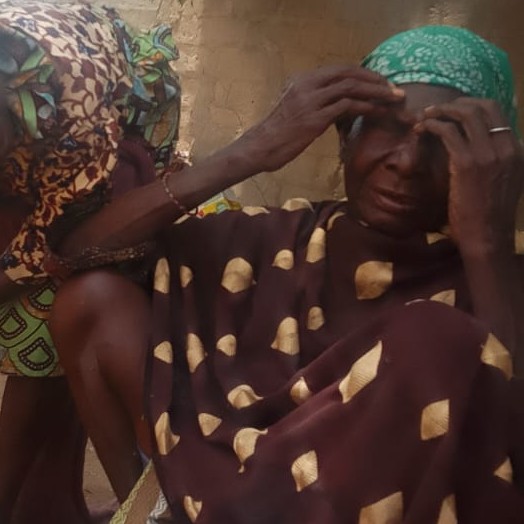
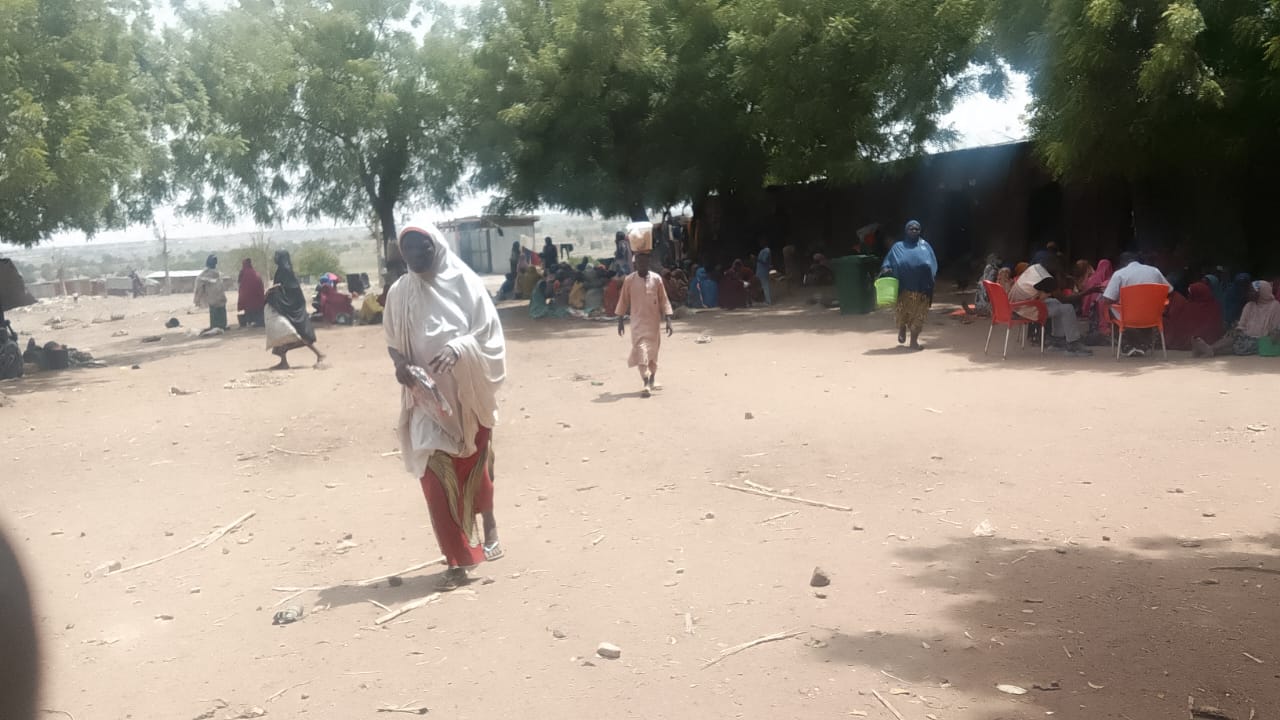
On a recent Monday morning at Ramin Kura Internally Displaced Persons (IDP) camp in Sokoto State, northwest Nigeria, an aging Mari Yahu sat quietly on a placement above the dusty ground. As the morning sunlight lit the deep lines of worry on her face, she thought about happier days back home. Before violence drove her to this camp, Mari, like everyone else, had her two eyes seeing the world and had never imagined that this particular Monday would find her navigating life with only one of the eyes working.
Not long after she arrived at the camp, one of her eyes became infected because of the poor condition of the environment. It started with itching. Mari did not think much of it at first but her vision grew blurry. She went to the nearest primary health center (PHC) but was turned away because she had no money. Without care, the eye got worse. Now she sees with only one good eye.
“When I arrived at this camp my two eyes were working perfectly, but now I only see with one eye,” she told The Nation Voice while still hoping that the bad eye would heal. With no government help, she goes to the streets to beg. She said the small amounts she collects went on food and medications for her eye. “I beg on the street to take care of myself, especially my eyes.”
Like Mari, many others in the camp face similar struggles. Aliyu Sarkin Fawa, a father of eight fled banditry in his hometown in Zamfara State, where gunshots and fear had become part of daily life. He thought the violence and suffering had ended after he had escaped from his state, but it did not. When he arrived at the camp in 2025, he had a minor injury on his right leg, but without proper care, the wound grew worse. When he visited the health center, his condition didn’t change because he couldn’t afford the treatment cost.
Aliyu added that government representatives occasionally visit the clinic for check-ups and run free laboratory tests and x-ray scans but provide no medicine or follow-up care. “There was a time when a government official came here. They did a check-up on us but they didn’t give us medicine,” he recalled.

Most residents of Ramin Kura camp fled fighting in neighboring communities and states, including Zamfara, Kebbi, and Niger states. The camp was meant to be a short-term safe place. For many, it has become a long stay filled with new health troubles, resulting from lack of access to basic healthcare. Nigeria has more than 2.7 million internally displaced persons, the third largest in Sub-Saharan Africa only behind Congo and Somalia, yet conflict continues to exacerbate the crisis.
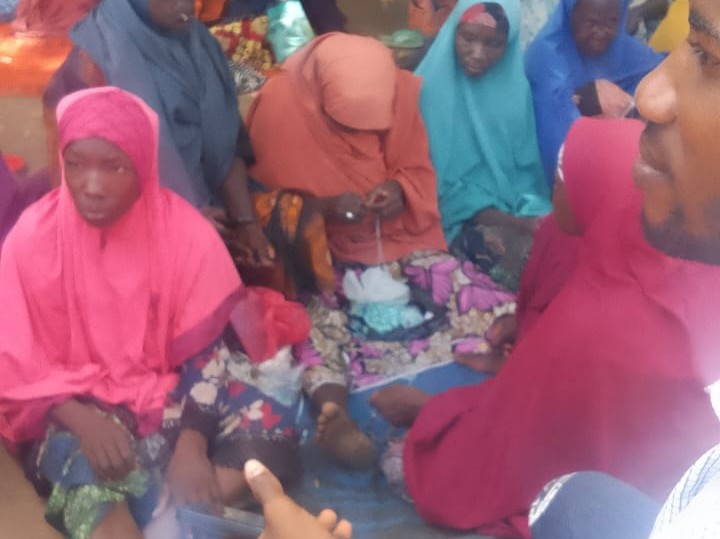
In 2021, the federal government signed a revised edition of the National Policy on IDPs. The policy states that all wounded and infirm disabled displaced persons shall receive free medical care. But this is just a paper theory at Ramin Kura camp according to residents. Aisha Muhammad Ali, one of those residents disclosed that the state government brings basic drugs like paracetamol, but supplies are not steady. Therefore, families usually make donations among themselves to seek treatment for their ill ones.
For childbirth, the situation is harder. “When a woman needs to give birth, we must take her to a hospital,” Aisha explained. “If we have no money, they will not help. We contribute money so the pregnant woman can deliver.”
Funds Released, Action Failed
Aisha recalled how an outbreak of cholera fever and diarrhea recently swept through the Ramin Kura camp, lasting for nearly two weeks and costing several lives. She said the health center at the camp turned patients away unless they could afford medication costs. “There was a disease outbreak here but we got no help at the hospital because of money, yet the government did nothing,” she bemused and said most residents had to turn to herbal medicine, which was ineffective to most of the patients.
In Nigeria, Sokoto is one of the states most affected by herder-allied-related violence. The state has faced serious violence from armed groups, which resulted in the displacement of tens of thousands people. Yet, new threats from militant groups linked to the violent insurgencies persist. The Nigerian government has policies to help displaced people. One of the policies says wounded or disabled IDPs should receive medical care, including counseling when needed, but in practice, most of them receive little or no support.
Over the years, the federal and state governments have set aside significant funds for the IDP support system. Most recently, in 2025 the Federal Executive Council (FEC), approved two major external loan facilities worth $396 million to support critical humanitarian and health projects in northern Nigeria. The first facility was a $300 million World Bank credit to support IDPs and host communities across several states in the region, including Sokoto. The second approval was for a combined $96 million credit from the Islamic Development Bank (IsDB) and the African Development Bank (AfDB), with $50 million and $46 million, respectively, allocated for the Sokoto Health Infrastructure Project.
Similarly, in 2023, the sum of N50 million was allocated by the Sokoto state for quick response and financial assistance to victims of communal crises, war, tornadoes, aircraft, explosion, bush fire, armed robbery, IDP’s refugees and returnees. But in 2024, the amount allocated by the Sokoto state government for the same purpose was decreased to N15 million. Not only that, in the same 2023, N5 million was allocated for the provision of relief materials to IDPs under UNSDPs (Delivery one).
Likewise, the money allocated in 2025 for quick response and financial assistance to victims of communal crises, war, tornadoes, aircraft, explosion, bush fire, armed robbery, IDP’s refugees and returnees was increased to N100, 000, 000. For provision of relief materials to IDPs under UNSDPs (Delivery one) N200, 000, 000 was equally allocated.
Despite these funds, many refugees say their conditions didn’t change and healthcare remains hard to reach for them as they continue to struggle with untreated illnesses. Many have died. “We have reported to the government, which promised to build a clinic for us, but it has been four months now and nothing has happened yet,” said Danlami Ibrahim, a resident of the camp.
Delayed Treatment Can Intensify Condition
Dr. Reinnet Awoh, a public health physician, explained the risks of delayed care. “The major challenge is delayed treatment,” he said. “Common illnesses such as malaria, diarrhea, and respiratory infections can quickly become severe in crowded camps with poor sanitation and limited clean water.” He further suggested the clear steps needed to tackle the challenge. He said the government should work closely with non-profits, international agencies, local health workers, and community leaders for better coordination. That way, he believed, could bring free or low-cost care for children, pregnant women, the elderly, and those with chronic illnesses.
When confronted with evidence of IDPs being forced to crowdsource funds for basic medication, Hon. Maryam Suleiman, the Special Adviser to the Sokoto State Governor on IDPs and Resident Communities, deflected accountability. While insisting that the government provides medical care, Suleiman normalized the financial burden placed on vulnerable populations, comparing the plight of displaced persons to everyday family expenses.
“No one is denying the IDPs from accessing PHC,” she stated, downplaying the crisis. “It’s normal to contribute money to buy drugs to cure their illness, we [also] do it within our families. [But] the government is trying to provide necessary healthcare for them.”
Life in Ramin Kura camp shows both hardship and strength with families becoming more vulnerable to deadly health conditions while the government failed to address the predicaments. Until those improvements arrive, residents of Ramin Kura camp hope to keep up with their collective efforts in addressing their problems, by sharing what little they have, while also calling on the government to step in for them.
Mari was left, still-seated on the placement, thinking, maybe of her home or rather of her happy days at the camp when both of her eyes were still working. At the entrance of the camp, some petty traders were busy making local Hausa pastries. Kuli-kuli – a groundnut cake – still sizzling in frying oil. From behind, little happy children were chit-chatting with representatives of a certain non-profit organization that occasionally visits them. And just like that, our reporter waved Mari a good bye.